
Basement Waterproofing Guide for NC Mountain Homes
Why basements and crawl spaces flood on sloped lots, interior vs. exterior fixes, and how grading and drainage tie into the solution.
Water Problems Usually Start Outside the Wall
A wet basement or musty crawl space almost always traces back to what's happening outside the foundation, not a defect in the concrete itself. On a sloped High Country lot, rain and snowmelt naturally run downhill, and if the grading, gutters, and drainage around the house weren't built to carry that water away, it collects against the foundation and eventually finds a way in.
Why sloped lots are harder on foundations
Flat-lot homes deal with standing water; mountain homes deal with moving water. A heavy rain on a hillside lot can send a surprising volume of runoff toward a downhill foundation wall in a short amount of time. Older homes built before modern grading standards, or additions built without re-grading the surrounding soil, are especially prone to this since the ground was never shaped to direct water away from the house.
Exterior fixes: the more permanent solution
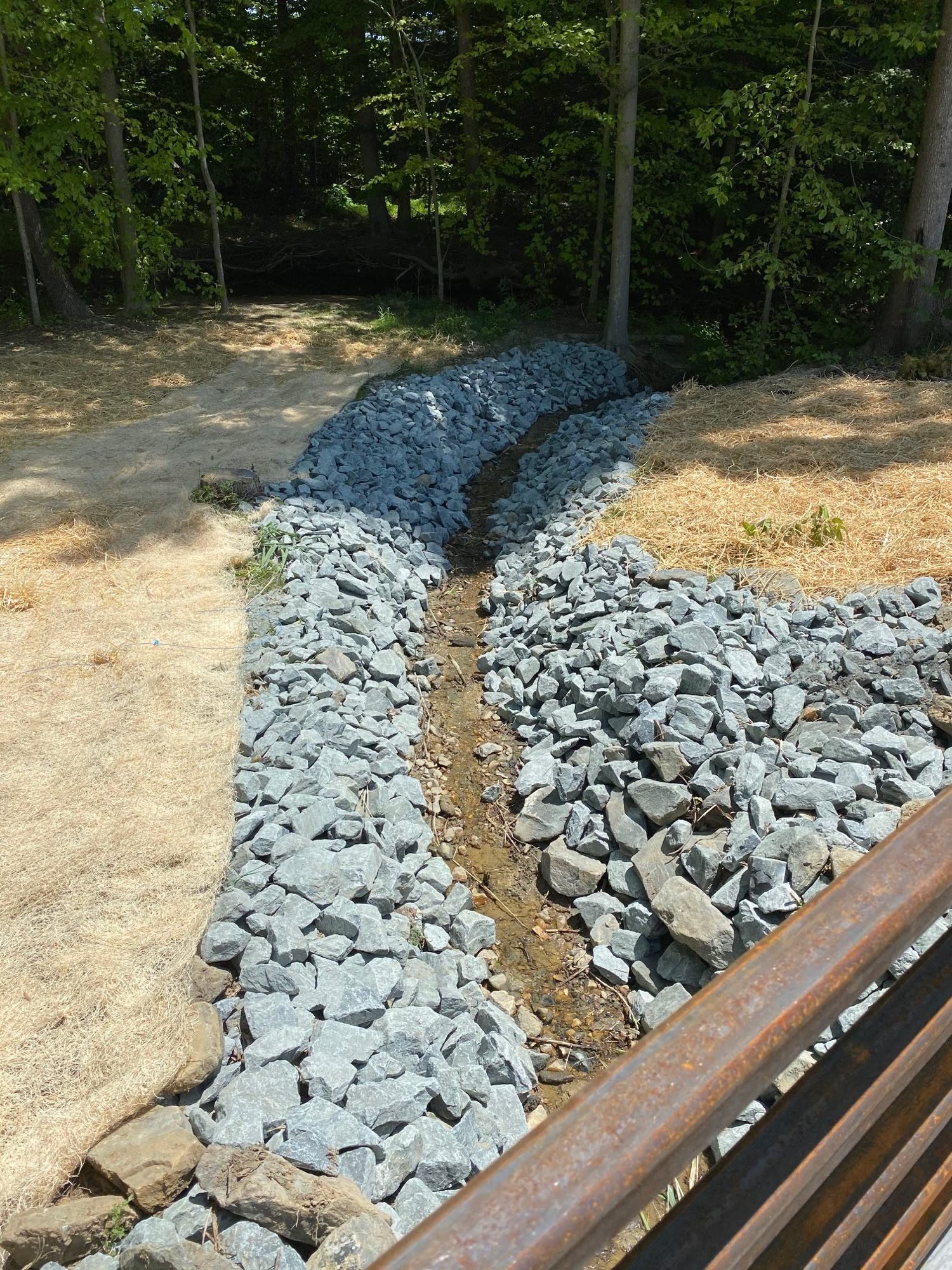
Exterior waterproofing addresses water before it ever reaches the foundation wall. That typically starts with grading the soil so it slopes away from the house for at least the first several feet, and extending downspouts so roof runoff discharges well clear of the foundation. Beyond that, an exterior French drain — a gravel-filled trench with a perforated pipe running along the base of the foundation — intercepts groundwater and carries it away before it can build up pressure against the wall.
Interior fixes: managing water after it arrives
Interior waterproofing systems, like an interior drain channel paired with a sump pump, manage water after it has already reached the foundation. These systems collect seepage along the base of the interior wall and pump it out before it can pool on the floor. Interior systems are sometimes the only practical option when exterior excavation isn't feasible — for example, when a deck, patio, or mature landscaping sits right against the foundation — but they don't stop water from pressing against the wall the way an exterior fix does.
Reading the warning signs
A general musty smell or light dampness without an obvious source often points to humidity or condensation rather than a drainage problem. Water tracking in through a specific crack, along the cove joint where the foundation wall meets the floor, or around a window well usually means there's a clear entry point that a targeted drainage fix can address. Efflorescence — the white, chalky mineral deposits sometimes seen on basement walls — is also a sign that water has been moving through the concrete over time, even if the surface looks dry now.
Start with the cheap fixes first
Before any excavation or drain installation, it's worth checking two things that cause a large share of basement moisture problems: whether downspouts are actually discharging water away from the house, and whether the grading around the foundation slopes toward or away from it. Correcting those two items is the least expensive starting point and sometimes solves the issue on its own. If moisture persists after that, a proper drainage evaluation can determine whether an exterior French drain or interior system is the right next step.
Riverfront Group handles grading, drainage, and foundation-related work throughout the High Country. For more on drainage planning, see our yard drainage and water problems guide, or visit our concrete and foundation work guide if you're also dealing with foundation concerns. Reach out below to talk through what's happening at your home.
Dealing with a wet basement or crawl space?
Call Adam to talk through what's causing the moisture and the right fix for your property.